Blog / Advanced RAG: From Basic Pipelines to Production-Ready AI Systems
AI Engineering
Advanced RAG: From Basic Pipelines to Production-Ready AI Systems
22 February 2026
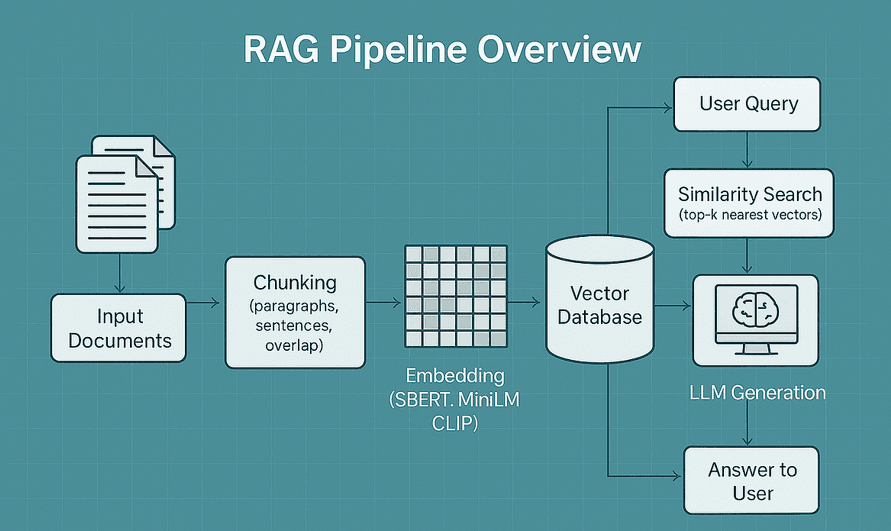
RAG is the backbone of modern LLM applications, but basic pipelines fail in production. This guide covers advanced retrieval, chunking, ranking, and system design techniques to build reliable, scalable RAG systems.
Retrieval-Augmented Generation (RAG) has become a core architecture for building reliable AI applications. By combining external knowledge with large language models, RAG helps reduce hallucinations and improves response accuracy.
However, while building a simple RAG pipeline is easy, making it production-ready requires deeper system design, better retrieval strategies, and careful optimization.
What is RAG
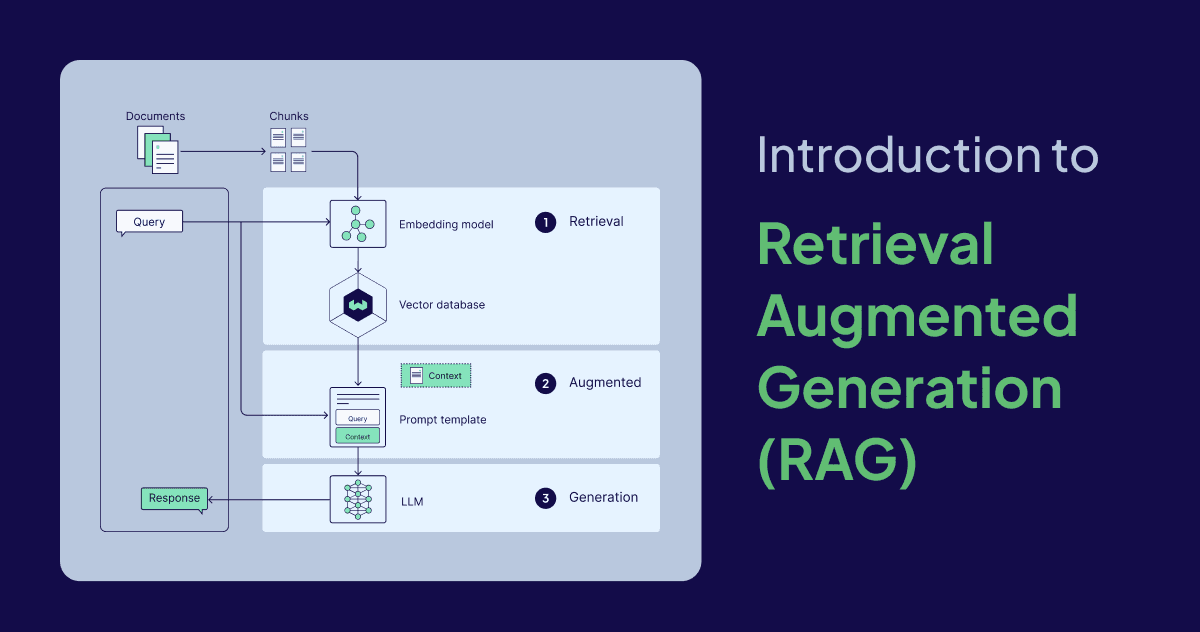
RAG is a framework that enhances language models by retrieving relevant information from external data sources before generating responses. Instead of relying only on model memory, it grounds answers using real data.
This approach significantly reduces hallucinations and ensures that responses are more accurate, up-to-date, and context-aware.
Core Components of RAG
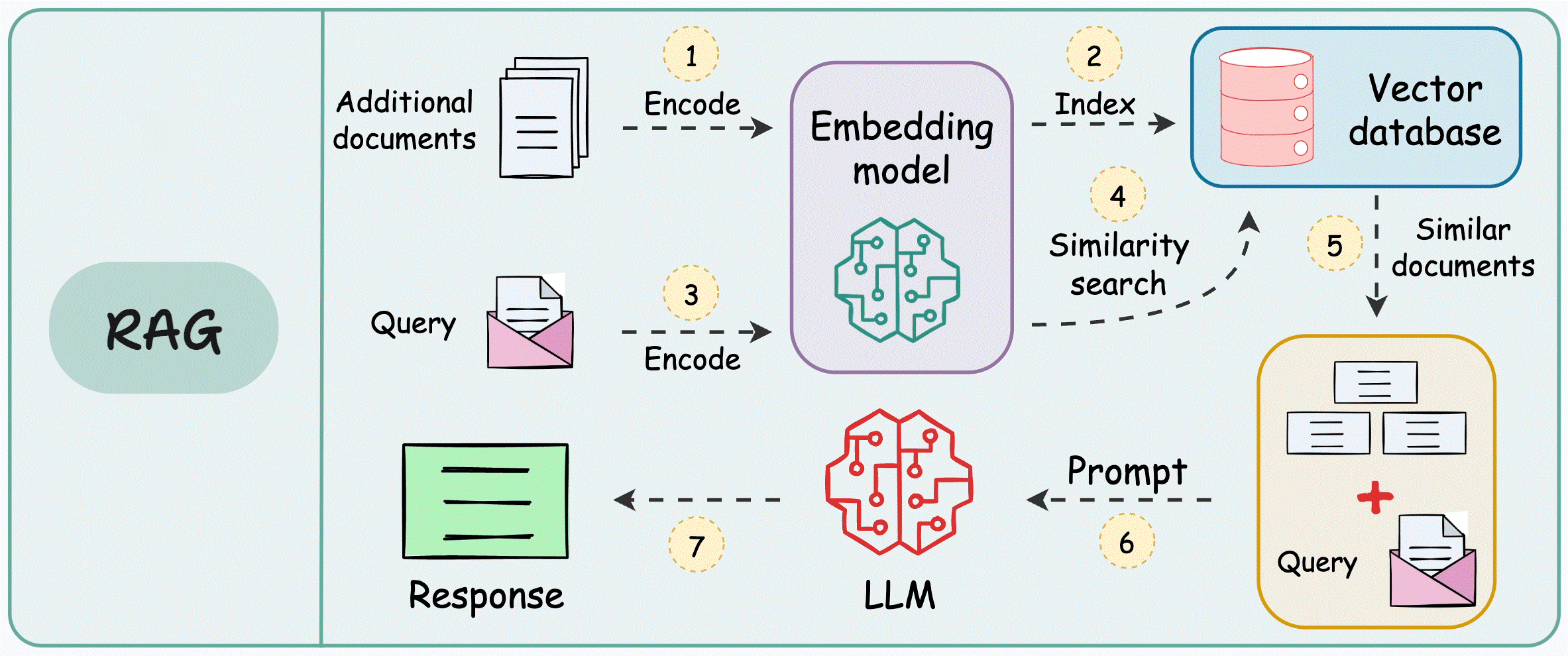
A RAG system consists of three essential components: retrieval, augmentation, and generation.
- Retrieval: Fetch relevant data from a vector database or external source.
- Augmentation: Combine retrieved context with the user query.
- Generation: Use an LLM to generate the final response.
How RAG Works in Practice
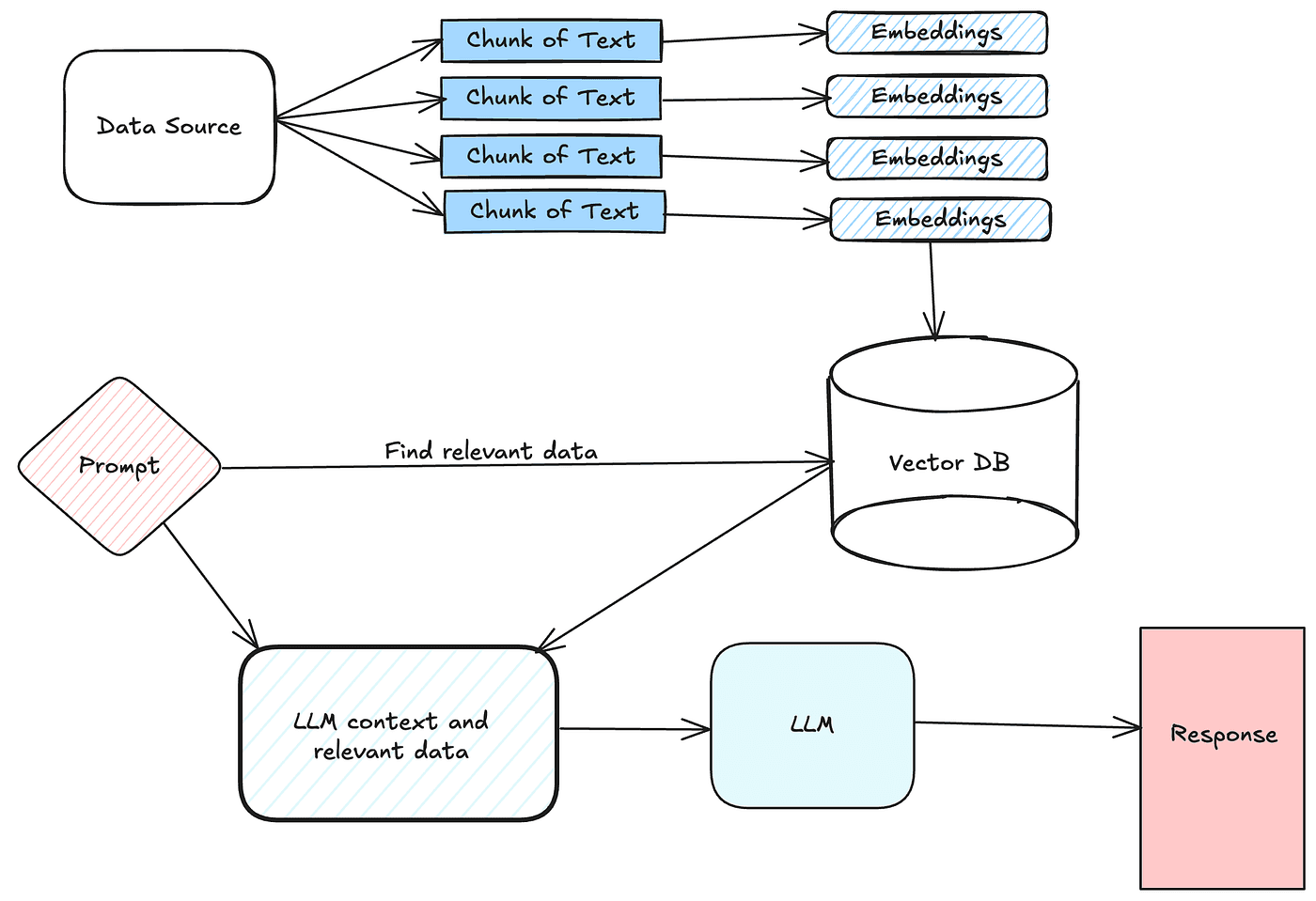
Documents are first split into chunks and converted into embeddings using an embedding model. These embeddings are stored in a vector database.
When a user submits a query, it is also embedded and compared with stored vectors to retrieve the most relevant chunks. These chunks are then passed to the LLM to generate the final response.
Why Basic RAG Systems Fail
Basic RAG pipelines often struggle with real-world queries. Issues such as irrelevant retrieval, missing context, and hallucinated answers are common.
These problems usually arise due to weak retrieval strategies, poor chunking, and lack of ranking or filtering mechanisms.
Types of Data in RAG Systems
RAG systems can work with multiple data formats including unstructured text, PDFs, structured knowledge graphs, and even LLM-generated content.
All data is transformed into embeddings and stored in a vector database, which becomes the knowledge base for retrieval.
Chunking Strategies
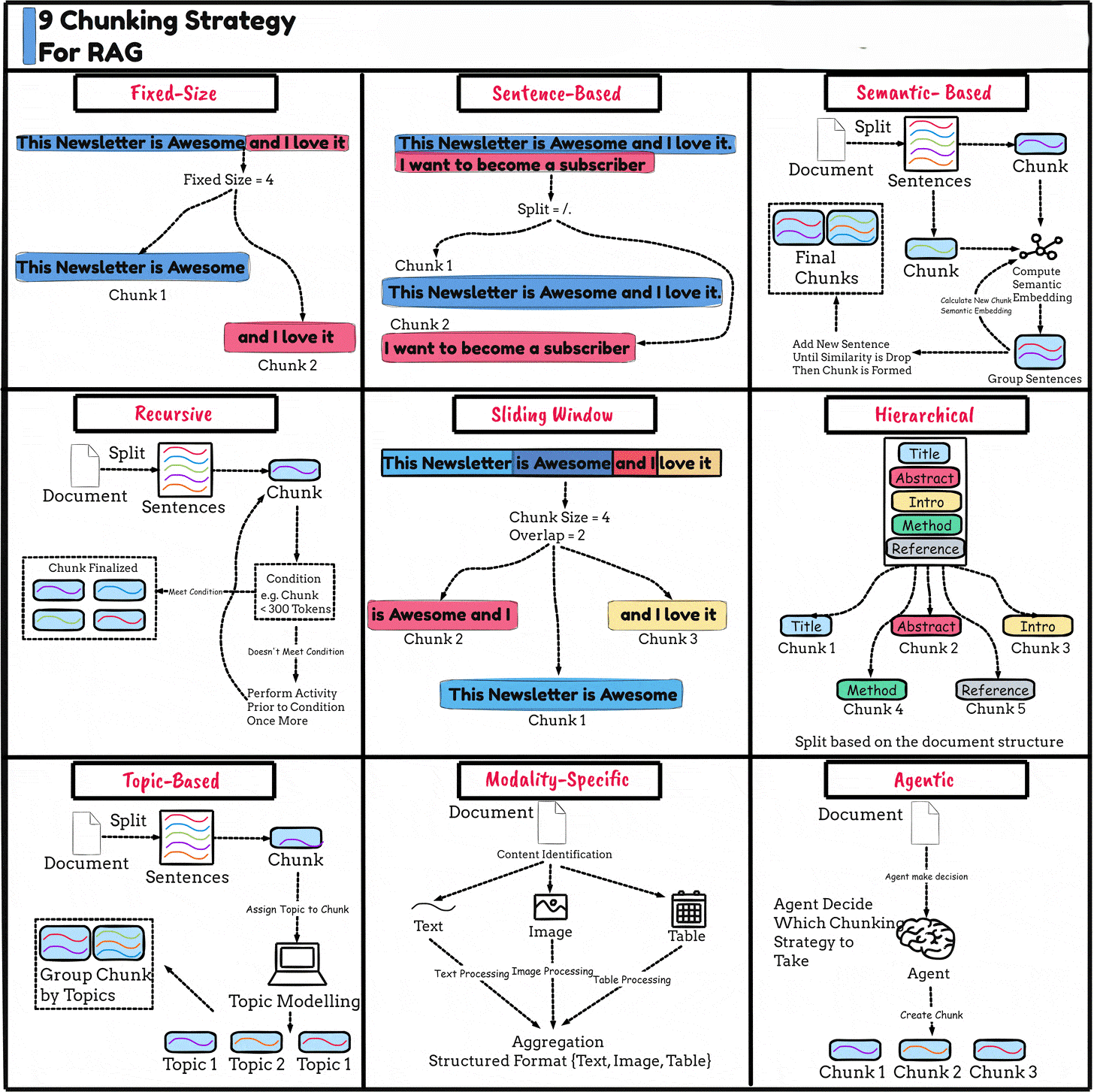
Chunking plays a critical role in retrieval quality. It determines how information is broken down before being indexed.
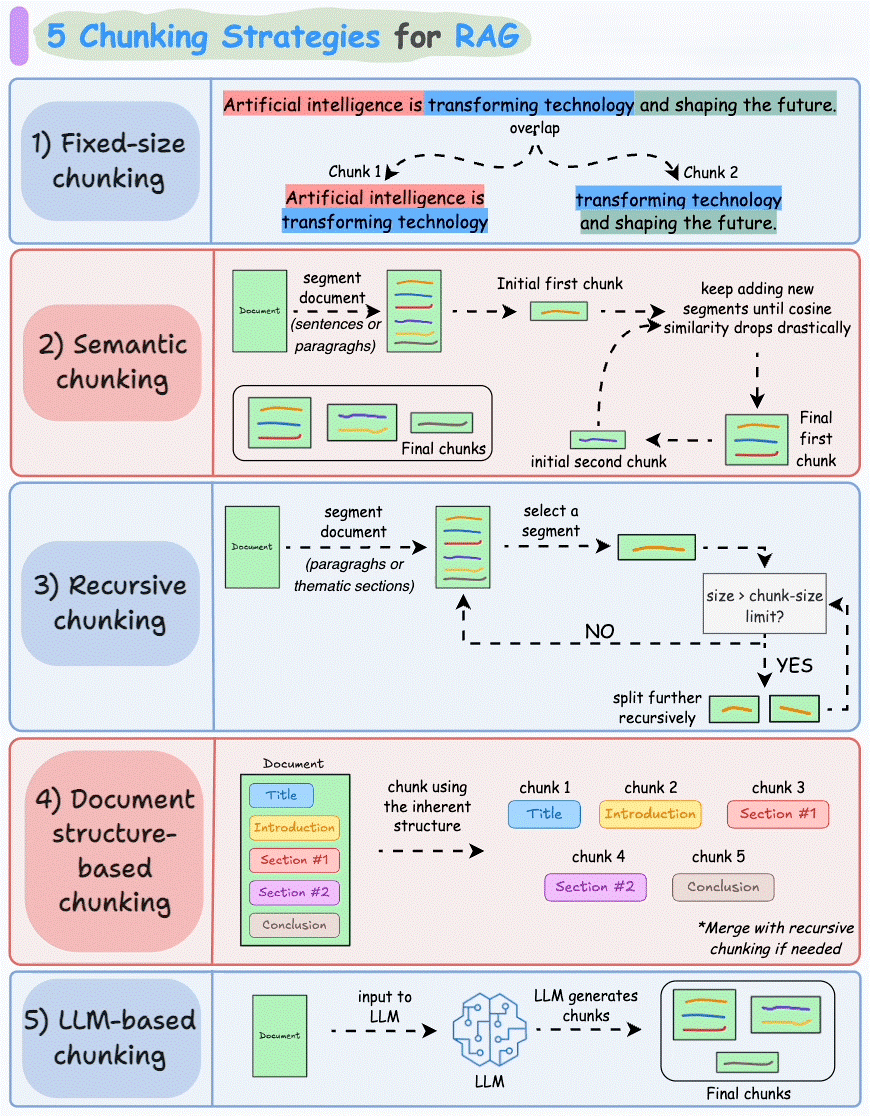
- Fixed chunking: Simple but ignores structure.
- Recursive chunking: Splits text hierarchically.
- Document-based chunking: Uses document structure.
- Semantic chunking: Groups content based on meaning.
- Agentic chunking: Uses LLMs to decide chunk boundaries.
Advanced Retrieval Techniques
To improve retrieval accuracy, modern RAG systems use hybrid search that combines semantic similarity with keyword-based matching.
Query transformation techniques such as rewriting, expansion, and multi-query retrieval help improve results further.
Reranking for Precision
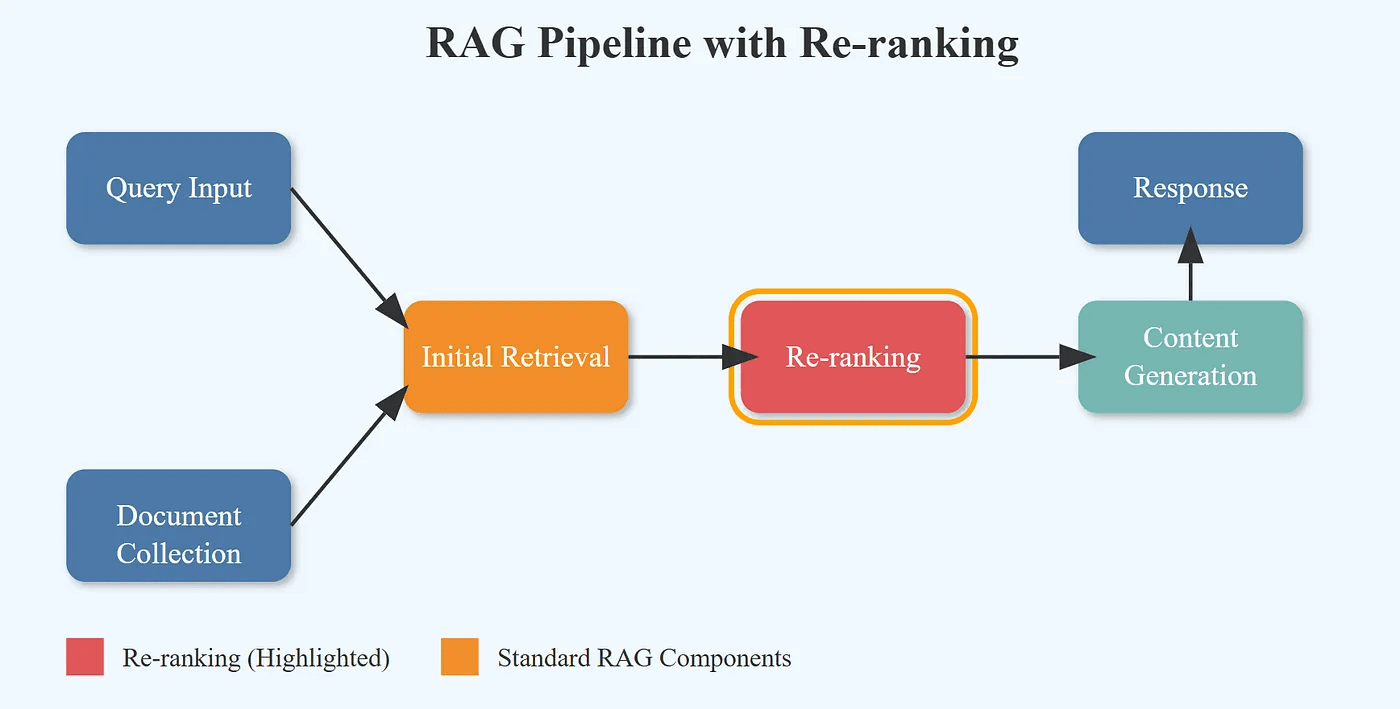
Initial retrieval often returns noisy results. Reranking helps reorder results based on deeper relevance scoring.
This ensures only the most useful context is passed to the LLM, improving answer quality.
Embedding Models Matter
The quality of embeddings directly impacts retrieval performance. Dense, sparse, and multi-vector embeddings each serve different use cases.
Choosing the right embedding model is critical for building effective RAG systems.
Common Retrieval Challenges
RAG systems often face issues like missing relevant documents, incorrect context, and loss of important information during ranking.
Solutions include query augmentation, better retrieval strategies, hyperparameter tuning, and reranking.
Enhancing RAG Systems
Advanced RAG systems incorporate techniques like multi-query retrieval, metadata filtering, hybrid search, and response summarization.
Improving data quality and indexing strategies also plays a major role in performance.
Semantic Caching
Semantic caching helps reduce latency by storing responses for similar queries. Instead of recomputing results, the system reuses previously generated answers.
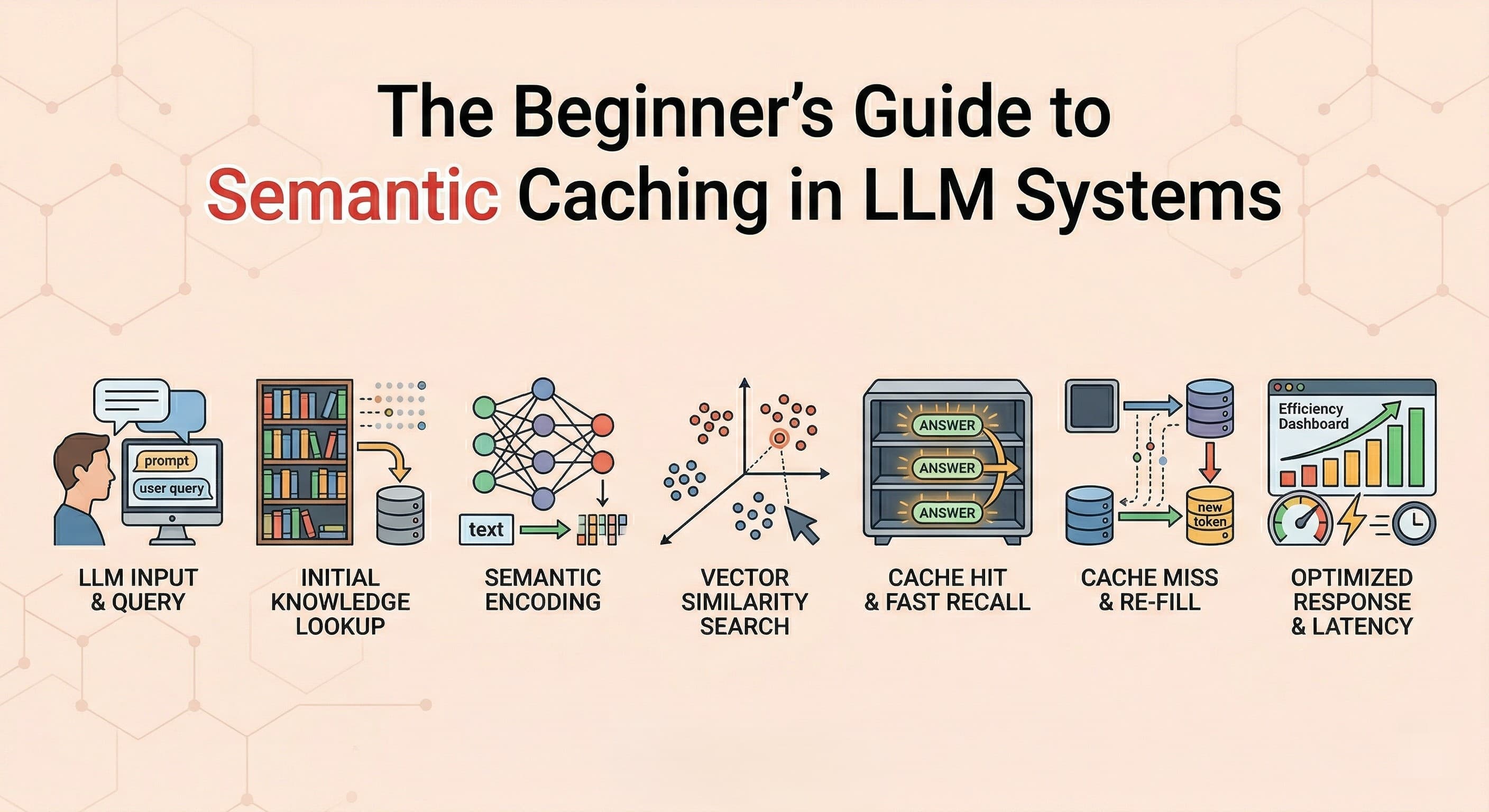
This improves speed and reduces computational cost in production systems.
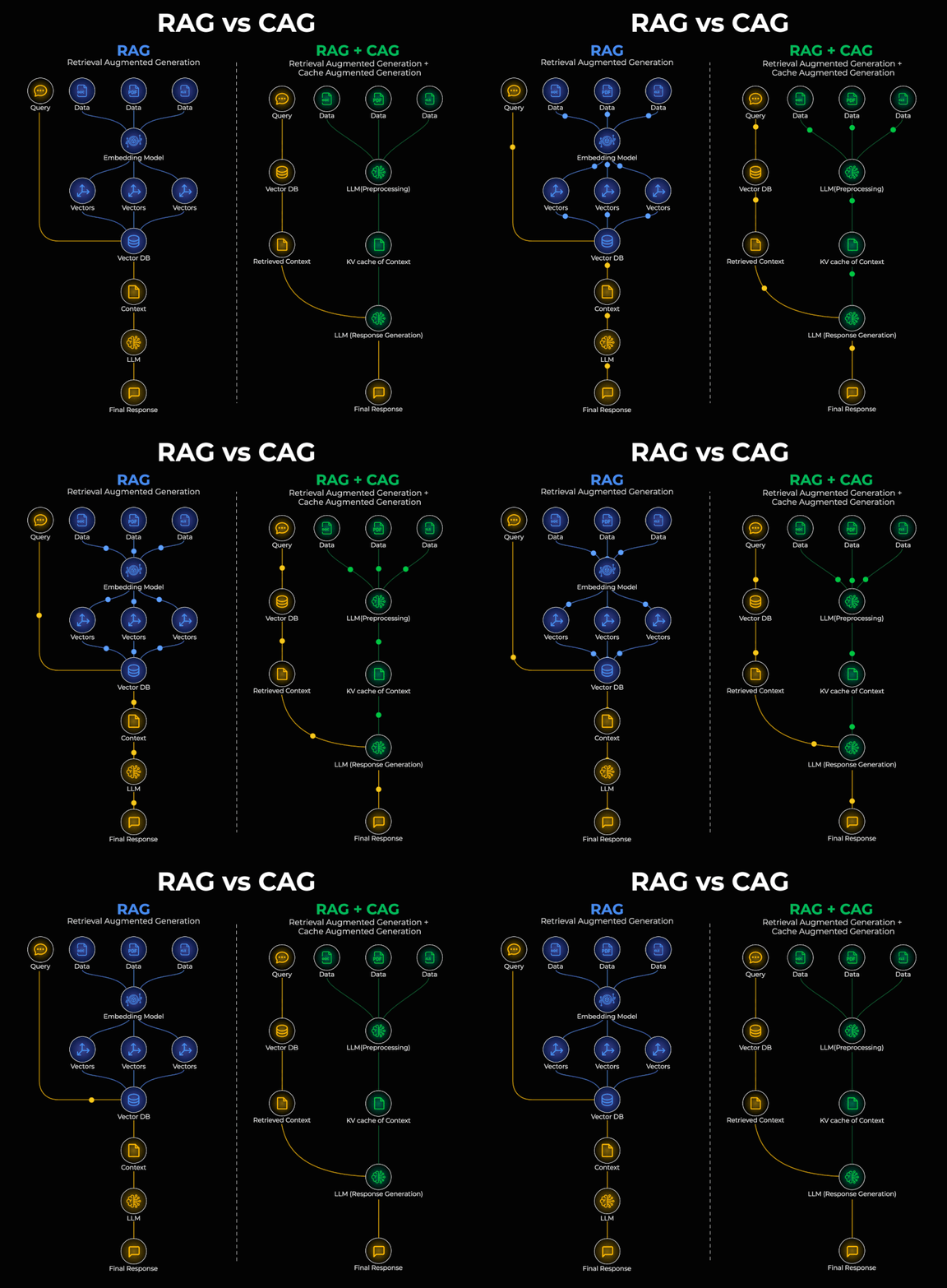
Key Differences
- RAG retrieves fresh data from external sources, while CAG reuses past responses.
- RAG focuses on accuracy and knowledge grounding, while CAG focuses on speed and efficiency.
- RAG is compute-intensive, while CAG reduces cost significantly.
- RAG handles dynamic queries better, while CAG works best for repeated queries.
When to Use RAG
- When data changes frequently
- When accuracy is critical
- When queries are unique
- For knowledge-heavy applications like legal, medical, or research tools
When to Use CAG
- When queries repeat often
- When low latency is required
- To reduce LLM cost
- For chatbots, FAQs, and customer support systems
Using RAG and CAG Together
Modern production systems combine both approaches. A cache layer is checked first, and if no result is found, the system falls back to RAG.
This hybrid architecture balances speed, cost, and accuracy, making it ideal for real-world AI applications.
Real-World Example
Consider a customer support chatbot. The first time a user asks a question, the system uses RAG to retrieve and generate an answer.
For repeated queries, the system uses CAG to instantly return cached responses, improving speed and reducing cost.
Agentic RAG Systems
Agentic RAG extends traditional pipelines by adding reasoning, memory, and tool usage. These systems can break down complex queries and solve them step-by-step.
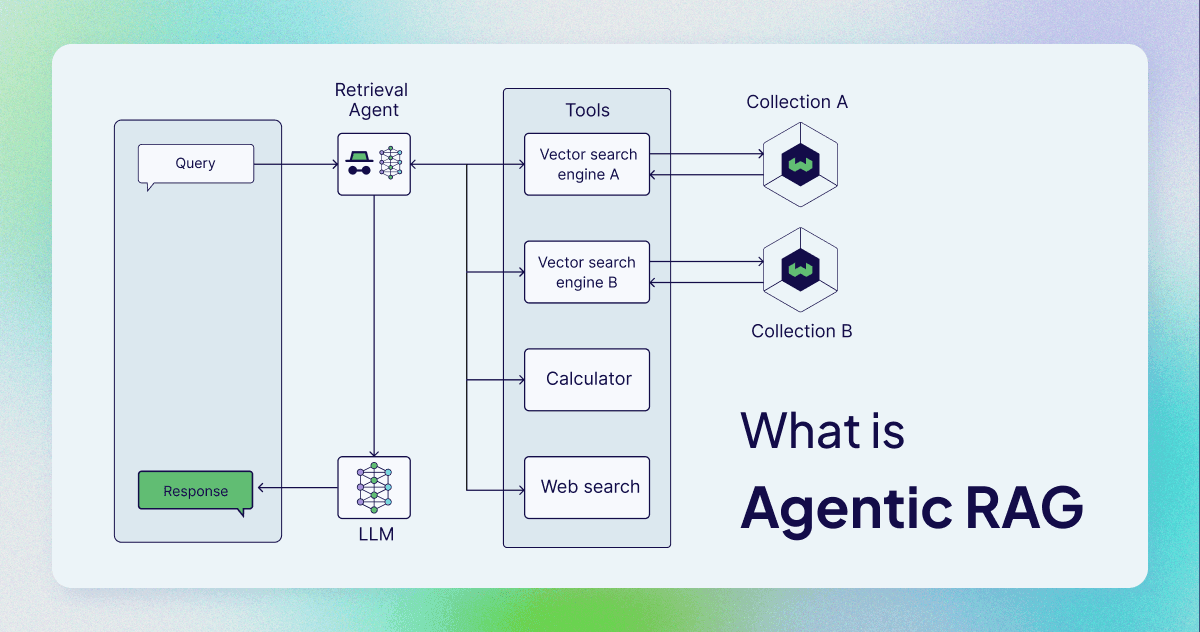
This approach is becoming increasingly important for enterprise AI applications.
Evaluating RAG Performance
Evaluation is essential to ensure system reliability. Metrics include retrieval accuracy, response relevance, faithfulness, and latency.
A good RAG system balances both retrieval quality and generation quality.
Production Considerations
Scaling RAG systems requires efficient indexing, fast retrieval, and optimized pipelines.
Choosing the right database, caching strategy, and infrastructure is critical for real-world deployment.
Closing Thoughts
RAG is evolving rapidly from simple retrieval pipelines to intelligent, adaptive systems. There is no single best approach-success depends on experimentation and optimization.
Understanding advanced RAG techniques is essential for building AI applications that are accurate, scalable, and production-ready.