Blog / Training vs Fine-Tuning: A Complete Guide for Modern ML Systems
Machine Learning
Training vs Fine-Tuning: A Complete Guide for Modern ML Systems
18 February 2026
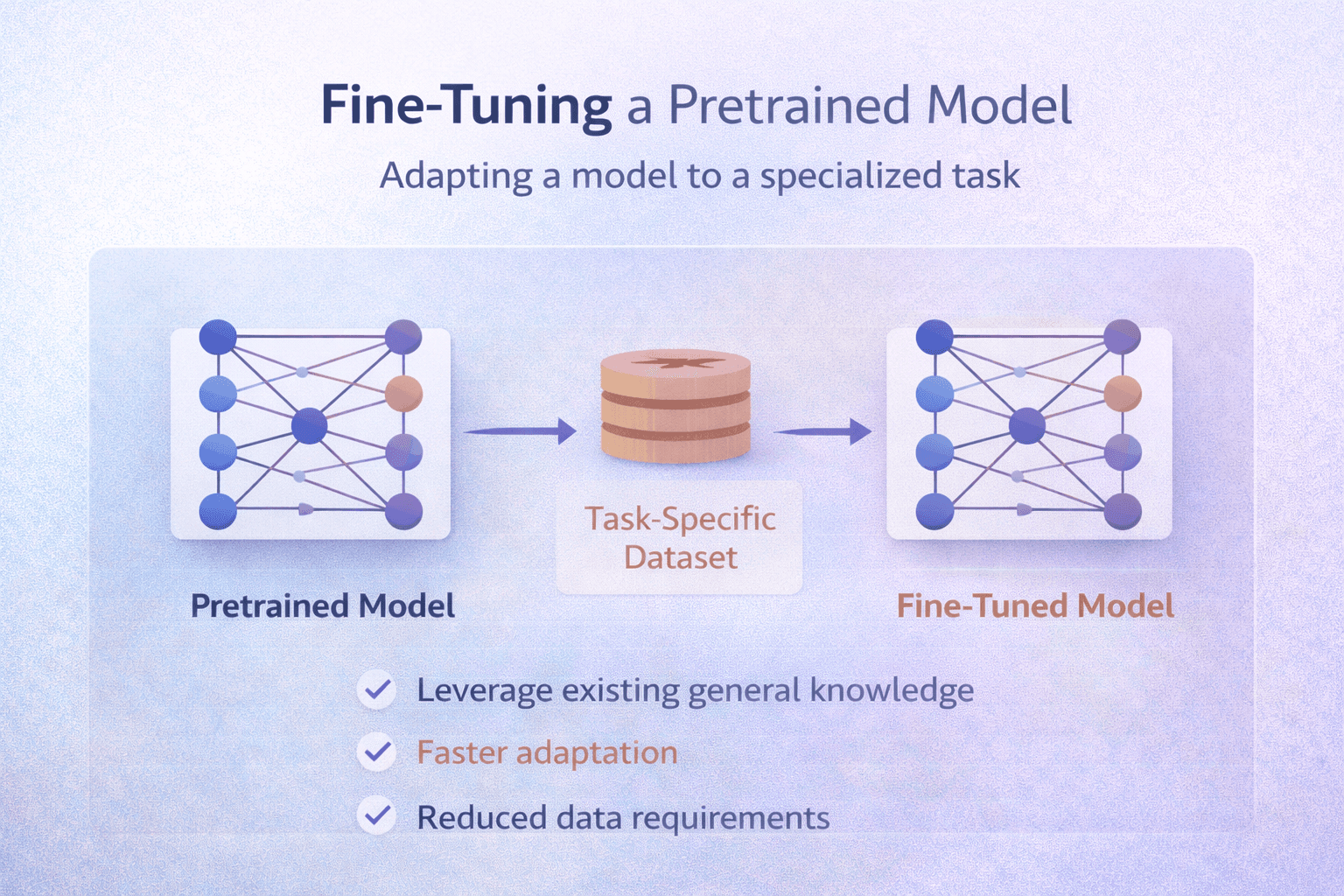
Training and fine-tuning are foundational processes in deep learning. This guide explains how each works, when to use them, and how they impact model performance, scalability, and generalization.
Training and fine-tuning are two critical stages in the lifecycle of machine learning systems. While they may appear similar, they solve very different problems. Choosing the right strategy directly impacts performance, cost, and scalability.
This guide explains both processes in depth -how they work, where they differ, and how they fit into modern AI development.
What Training Means in Deep Learning
Training refers to building a model from scratch. The neural network begins with initialized weights and learns by adjusting them based on input data and expected outputs.
The goal is to reduce the difference between predictions and ground truth values -a quantity measured using a loss function and optimized through backpropagation and gradient descent.
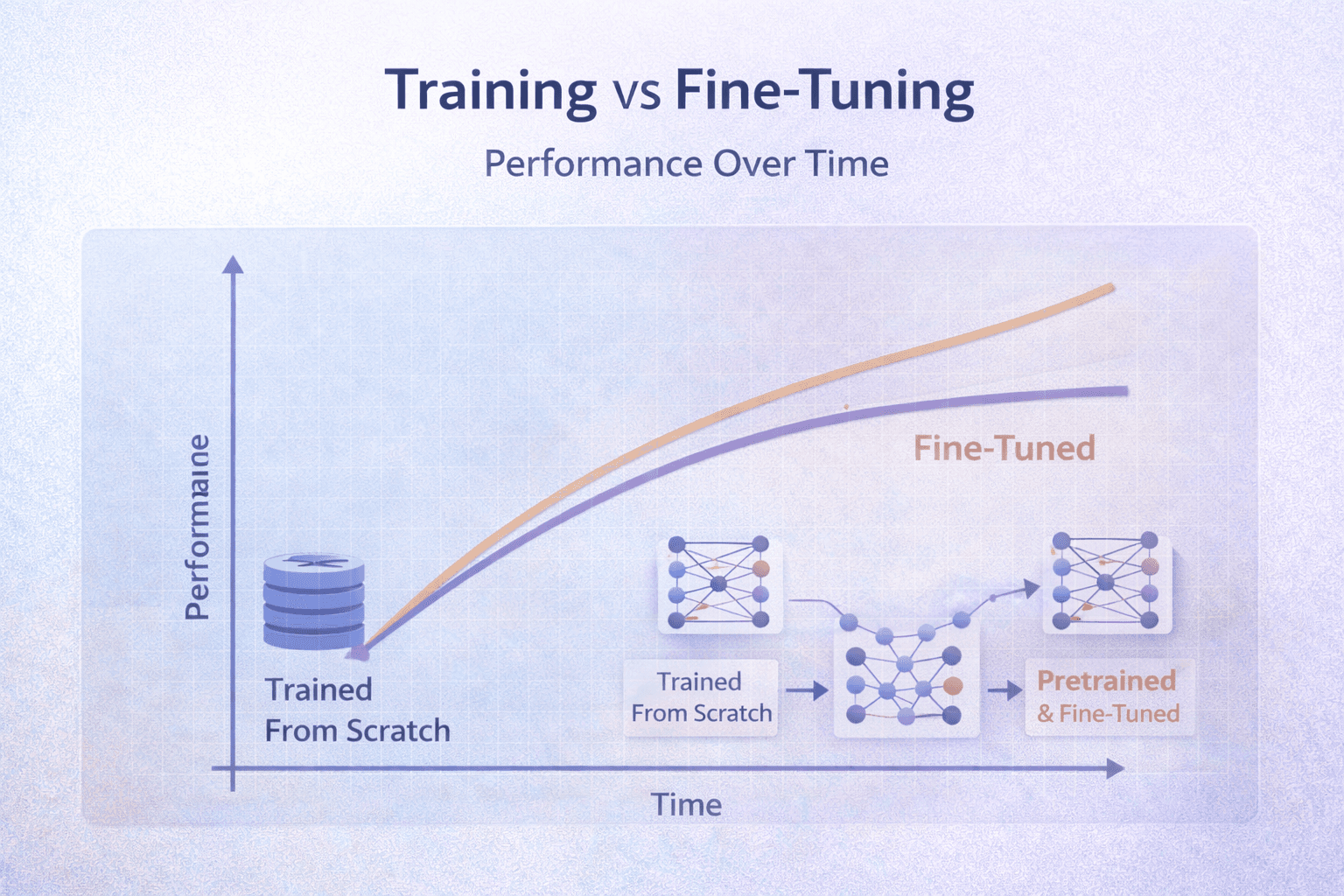
Weight Initialization Strategies
Before learning begins, weights must be initialized. Random initialization breaks symmetry between neurons, ensuring they learn distinct patterns.
More advanced techniques like He and Xavier initialization stabilize variance across layers, enabling faster and more reliable convergence.
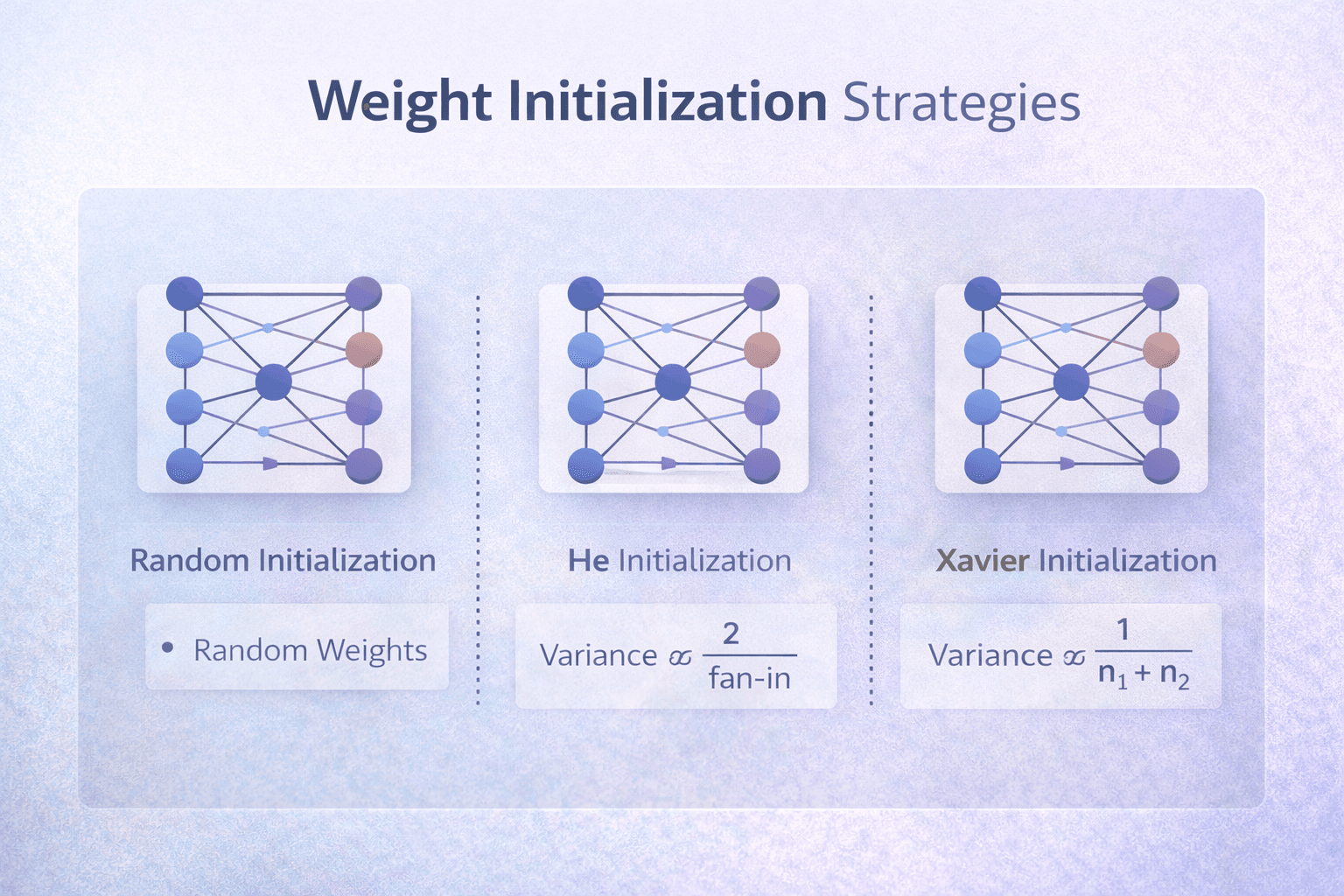
Optimization and Learning Rate
Backpropagation computes gradients, while optimization algorithms update weights. Popular variants include SGD, Mini-batch Gradient Descent, Adam, RMSprop, and Adagrad.
The learning rate controls update size. Too high can overshoot minima; too low slows convergence. Adaptive optimizers adjust this automatically.
Regularization Techniques
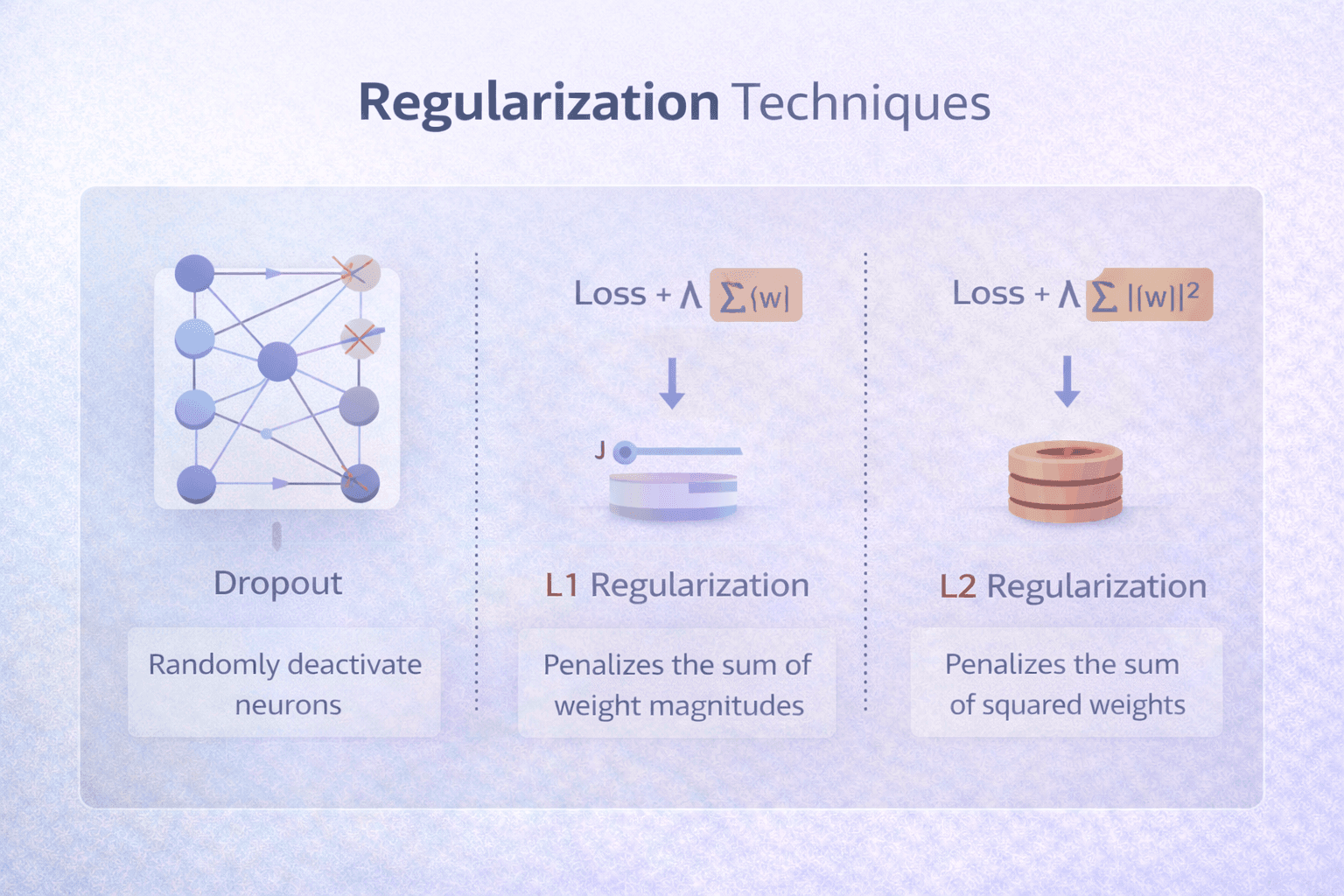
To prevent overfitting, techniques like Dropout randomly deactivate neurons during training. L1 and L2 regularization penalize large weights and reduce model complexity.
What Fine-Tuning Really Does
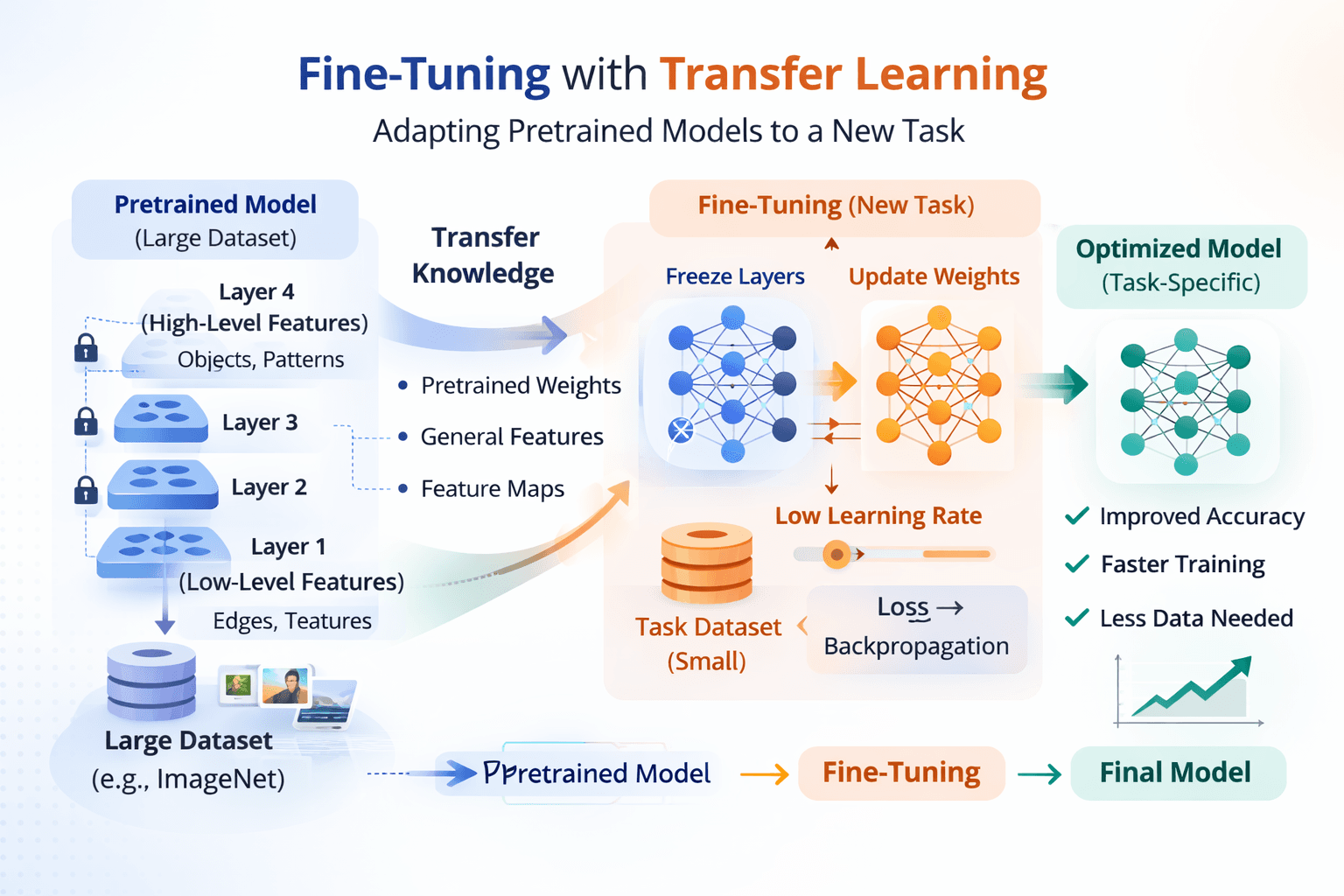
Fine-tuning begins with a pre-trained model and adapts it to a new task using a smaller, specialized dataset.
Instead of learning from scratch, the model refines previously learned features through transfer learning.
Fine-Tuning Strategies
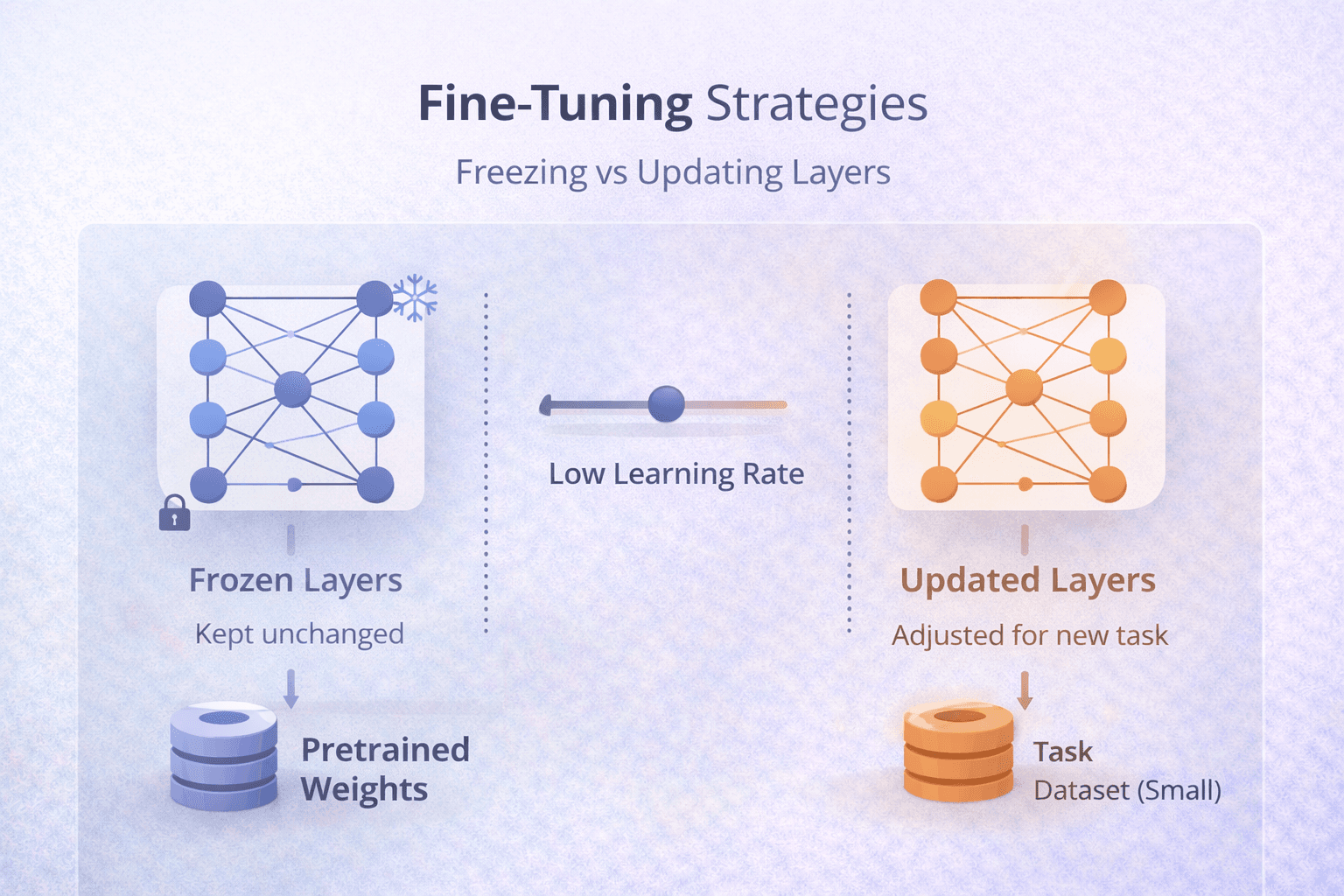
Fine-tuning often involves freezing early layers and updating deeper ones. Lower learning rates are used to avoid destroying pre-trained knowledge.
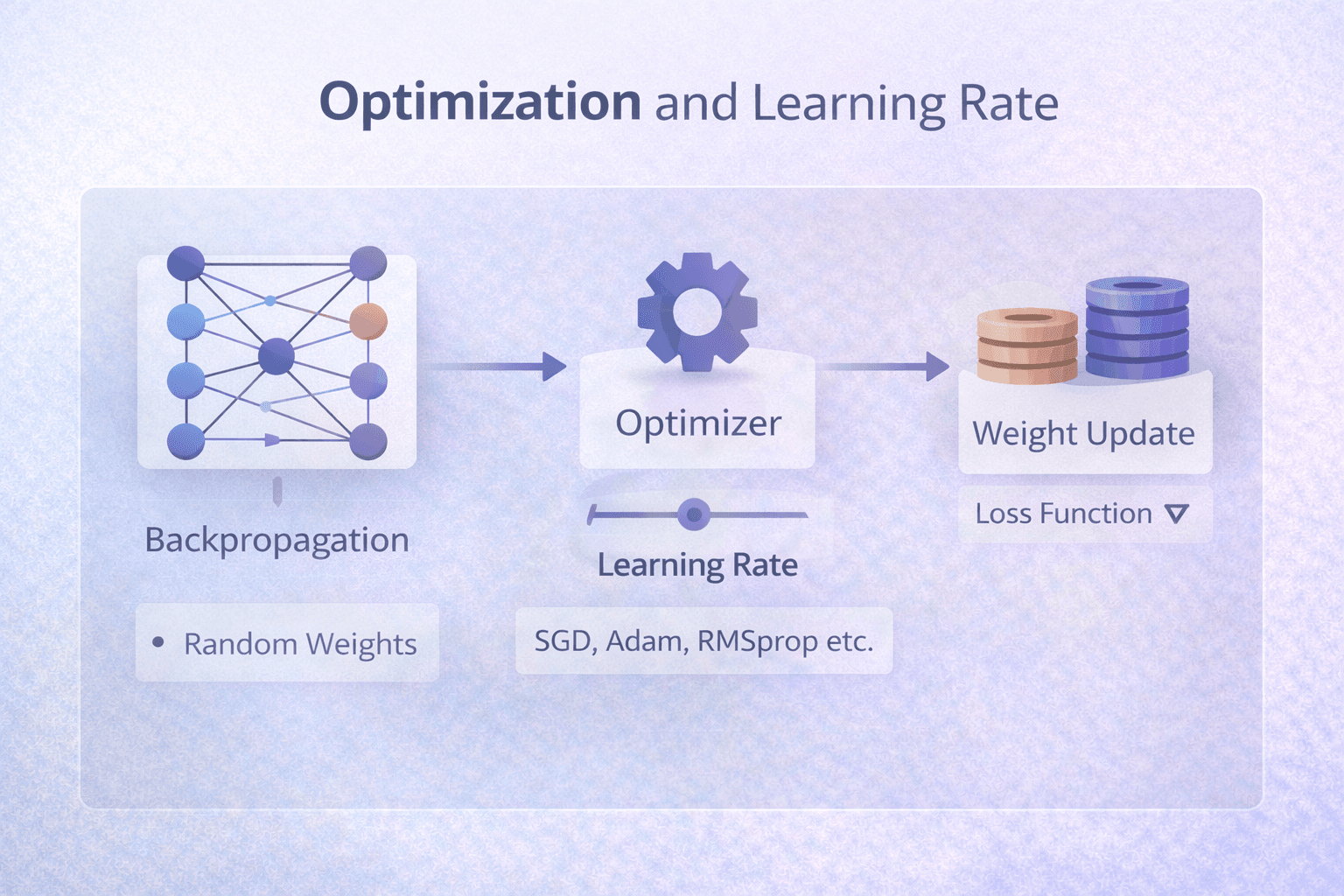
Training vs Fine-Tuning Comparison
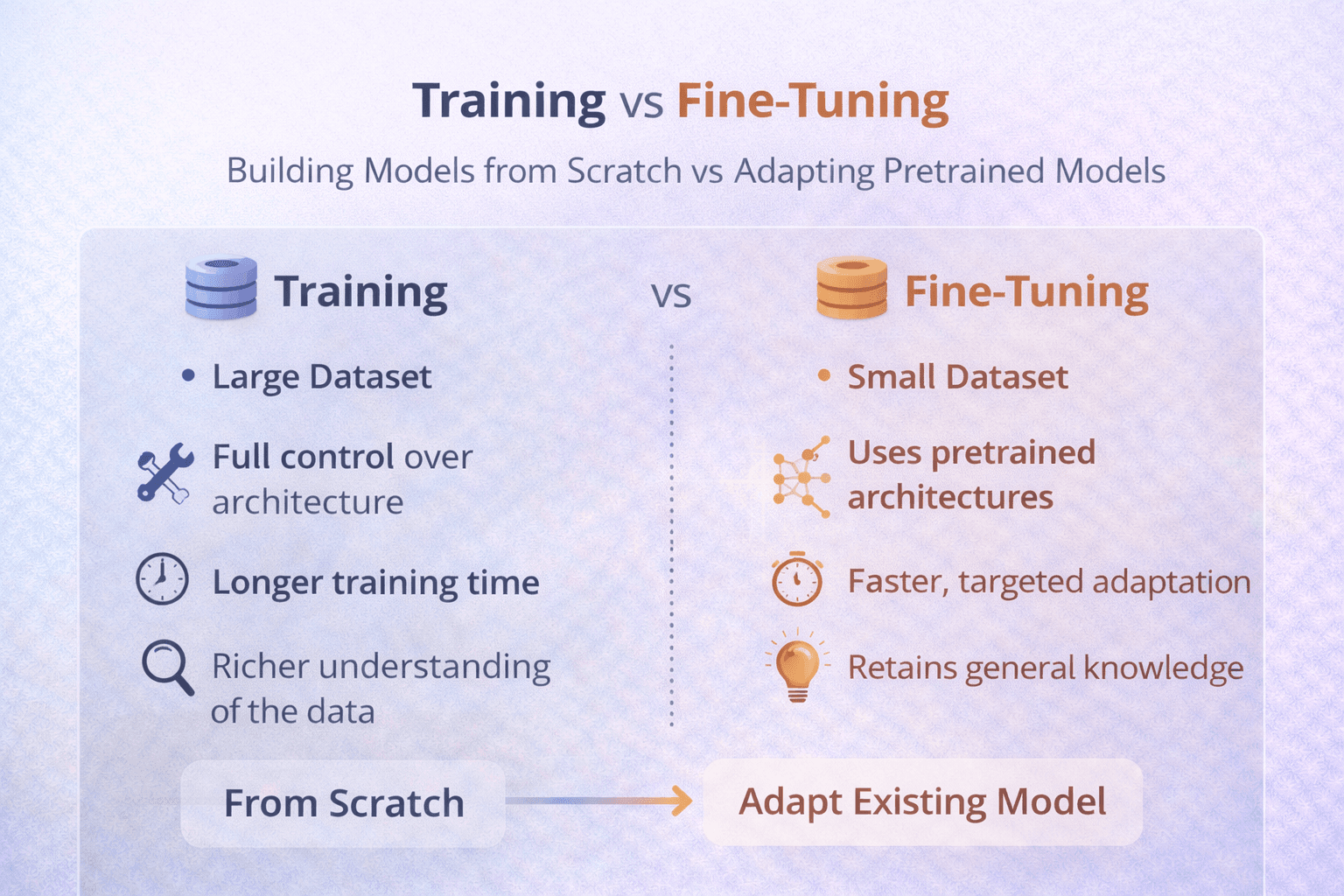
Training builds general knowledge from scratch. Fine-tuning adapts that knowledge efficiently. Each has strengths depending on dataset size, compute availability, and task similarity.
Advantages and Trade-Offs
Training from scratch offers full architectural control but requires significant data and compute. Fine-tuning is efficient and data-friendly but may inherit biases or suffer from catastrophic forgetting.
Closing Thoughts
Modern AI increasingly relies on fine-tuning large pre-trained models. However, understanding foundational training principles remains essential for building robust systems.
The future likely lies in hybrid strategies that combine large-scale pretraining with efficient, task-specific adaptation.